


Summer is when many players finally have the time to practice more. The challenge is turning that time into a routine. A portable tennis ball machine can help, but portability is not only about weight. It is about the full experience: carrying, setup, control, repeatability, and how easily the session begins.
Quick answer: a good portable tennis ball machine should be easy to carry, quick to set up, simple to control, and stable enough to support repeatable practice. For players who train at home, in parks, or on public courts, convenience matters as much as features.
1. Carry Experience
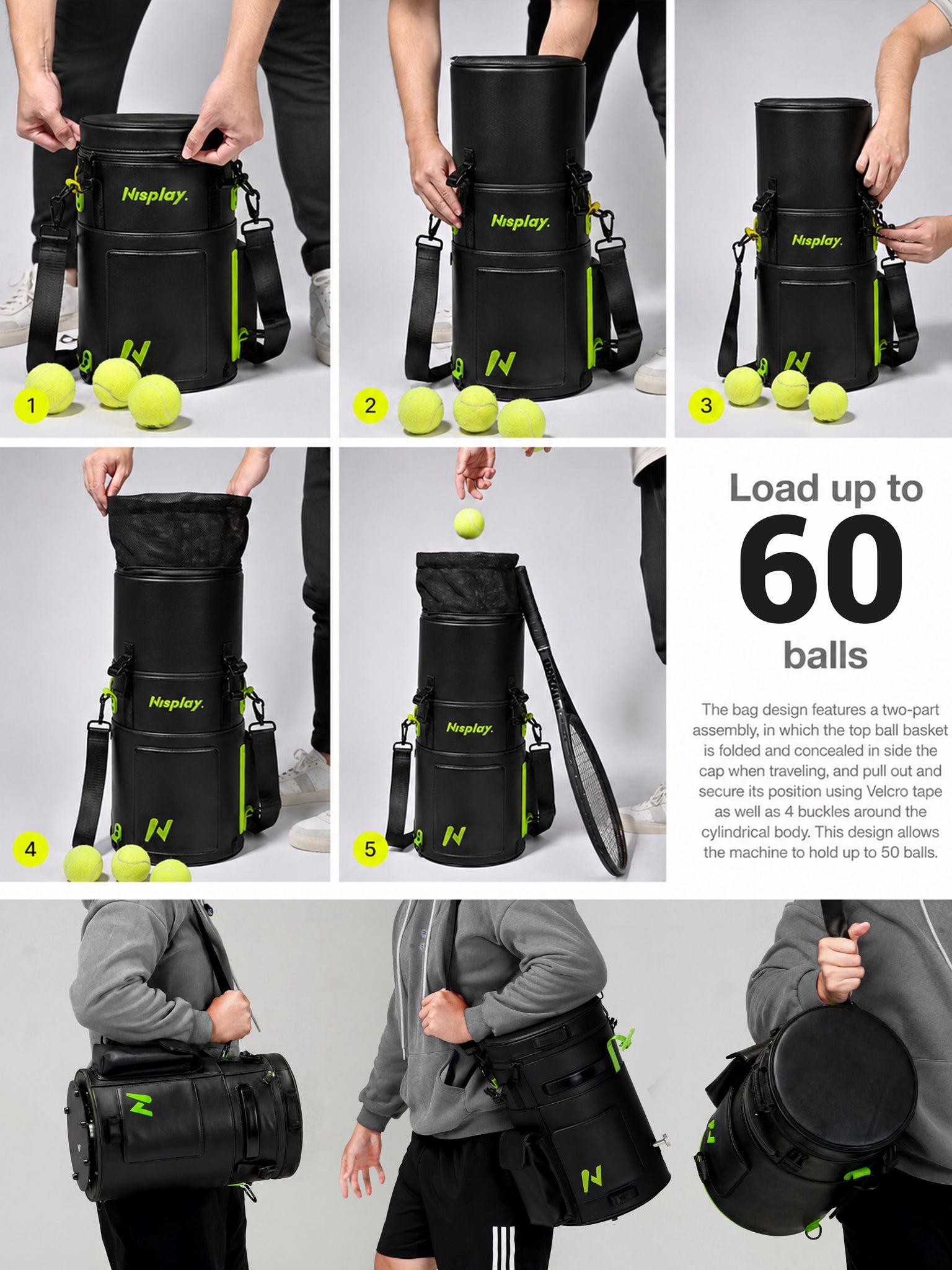
If the machine is awkward to carry, players will use it less. A compact design matters, but so does the way the machine moves with the player. Handles, straps, balance, and accessories all affect whether the trip to the court feels easy or annoying.
The Nisplay L1 Tennis Ball Machine is built around the idea that training should begin more easily. Its portable form makes it suitable for players who do not want a machine that feels like equipment from a storage room.

2. Quick Setup
Summer sessions often happen in small windows: early morning, after work, between family plans, or before the court gets busy. A portable machine should not require a long setup ritual.
Look for a machine that lets you start with a simple drill quickly. The first session should not require a manual, a toolbox, and a heroic amount of patience.
3. Adjustable Training
Portability is useful, but training still needs structure. A ball machine should allow players to adjust the type of feed, speed, interval, and trajectory so the drill fits the goal.
For beginners, that may mean slower, readable feeds. For more experienced players, it may mean a tighter rhythm and more demanding recovery work.
4. Solo Practice Value
The real value of a portable tennis ball machine is not just that it launches balls. It lets a player train without waiting for a partner. That changes the weekly practice equation.
A player who can get thirty minutes of focused reps twice a week may improve more than a player who waits for one long, inconsistent session every few weeks.
5. Summer Court Flexibility
Summer courts can be crowded. The best setup is one that works in different environments: public courts, club courts, backyard hitting spaces where safe, or family practice settings. A portable machine should feel flexible enough to move with your schedule.
When L1 Makes Sense
L1 is a strong fit for players who value mobility, solo practice, and quick access to repetition. It is especially useful for recreational players, tennis families, beginners building confidence, and anyone trying to make practice more consistent.
If you want a more traditional, stable machine setup, the a SERIES may be worth comparing. But if portability is the first requirement, L1 is the natural starting point.
FAQ
What makes a tennis ball machine portable?
Weight matters, but portability also includes carry design, setup time, battery use, storage, and how easy it feels to bring the machine to the court.
Is a portable tennis ball machine good for beginners?
Yes, if the player uses controlled settings and simple drills. Beginners should focus on contact, rhythm, and footwork rather than maximum speed.
Can a portable ball machine replace a hitting partner?
No tool replaces every part of live hitting, but a portable machine gives repeatable reps and helps players train when a partner is not available.

